🌿 URBAN GreenUP Project Summary: Re-naturing Cities for Resilience
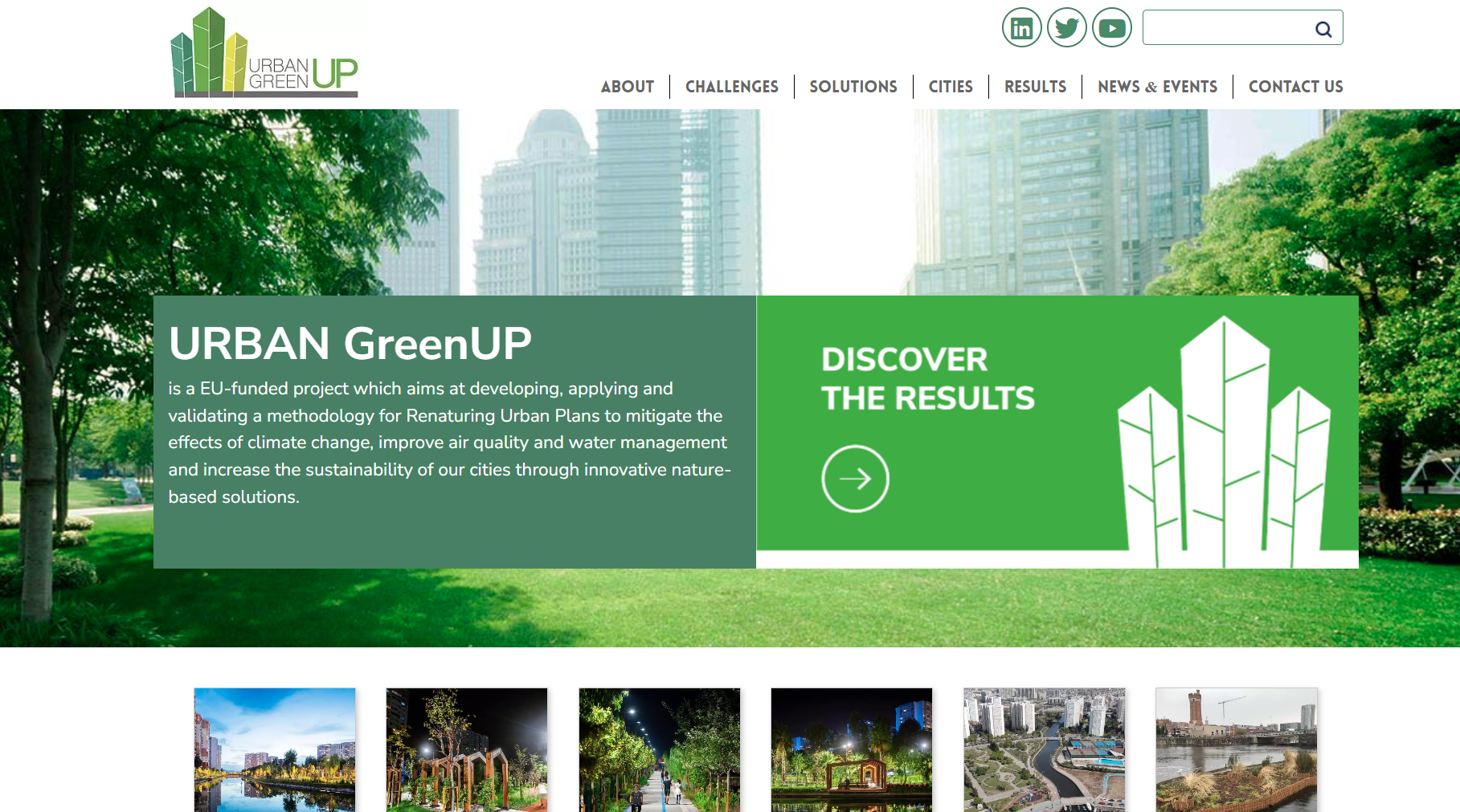
The URBAN GreenUP project aimed to address severe urban environmental issues (like poor air quality, floods, and heatwaves) resulting from urbanization and climate change. It did this by pioneering Renaturing Urban Planning (RUP), an innovative approach that integrates city planning with Nature-Based Solutions (NBS).
🎯 Overall Objectives and Approach
The core objective was to implement NBS through the RUP methodology and establish a replicable framework to achieve large-scale impact and foster a global EU-driven NBS market.
Implementation Strategy
- Front-runner Cities: Liverpool, Valladolid, and Izmir implemented over 100 actions (74 NBS and 28 non-technical interventions).
- NBS Types: Actions ranged from green cycle lanes and street trees (contributing to carbon sinks) to noise barriers and green roofs (improving water management and air quality).
- Replication: The developed RUP methodology was successfully adapted by Follower cities (Mantova, Ludwigsburg, QuyNhon, and Medellin), creating a global network.
💡 Main Results and Achievements
The project focused on the development, deployment, monitoring, and dissemination of the RUP methodology.
1. Renaturing Urban Planning (RUP) Methodology
- Development: The RUP methodology was developed collaboratively by experts, Front-runner, and Follower cities.
- Key Components: The methodology includes procedures for City and area diagnosis, baseline calculation, NBS scenarios generation, City zoning and evaluation, and scaling up guidelines.
- Validation: The RUP methodology was finalized and successfully validated with feedback from the Follower cities.
2. Deployment and Monitoring
- Intensive Transformation: Front-runner cities executed intensive transformations based on their re-naturing Plans.
- Comprehensive Monitoring: A comprehensive Monitoring and Evaluation Strategy generated an extensive database, accessible via Zenodo and stored for at least 50 years. This yielded a detailed catalog of KPIs and NBS performance metrics.
- Non-technical Interventions: Cities also engaged in non-technical activities, like citizen awareness campaigns, to promote inclusivity and acceptance.
3. Market Development and Exploitation
- Business Models: The project developed methodologies to evaluate social and economic impacts and designed innovative financial mechanisms and business models to foster NBS implementation.
- Key Exploitable Results: In total, the project delivered 58 key exploitable results, including 16 with commercial marketability.
🚀 Progress Beyond State-of-the-Art and Legacy
URBAN GreenUP set a new standard in urban sustainability by moving beyond traditional approaches to NBS.
- Integrated Strategy: Demonstrated the effective, integrated use of NBS (green, blue, and non-technical actions) directly into the Urban Resilience Strategy via RUP.
- Replicability and Scalability: The successful adaptation and validation of the RUP methodology by a global network of Follower cities proves its replicability and scalability, positioning it for widespread international impact.
- Long-Term Impact:
- Environmental/Public Health: NBS remain in place, providing lasting benefits to environmental quality and public health.
- Economic: Contribution to the growth of the global EU-driven NBS market through defined business models and expected growth in job creation and economic activity.
- Social: Enhancement of social inclusion and equity by promoting accessibility and engaging citizens through participatory planning.
- Knowledge Legacy: The project’s experience, including lessons learned from unforeseen events like the COVID-19 challenge, is captured in a comprehensive library and a final handbook for future urban development initiatives.