
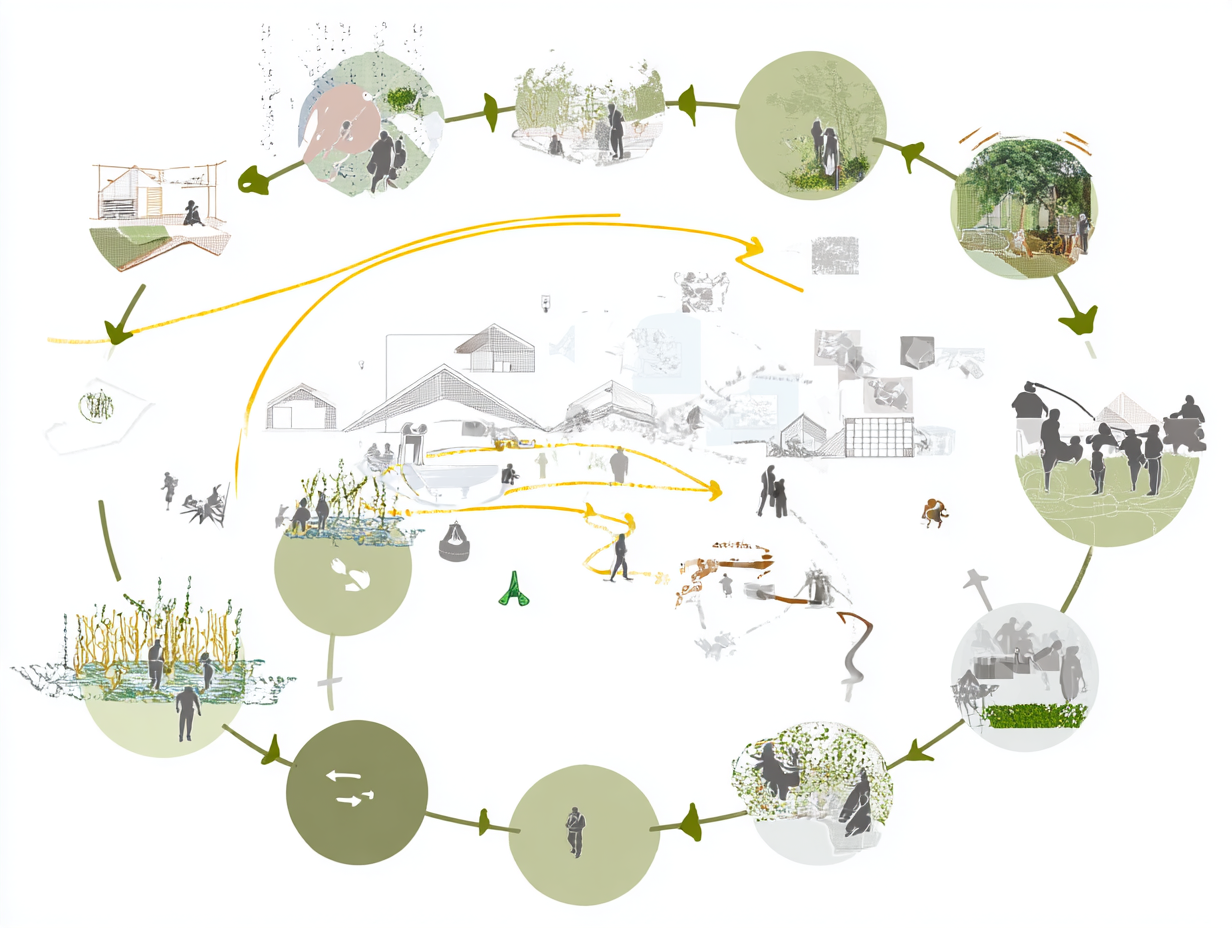
Built around 2015-2016 by Adrian Pop Architecture Office in collaboration with local associations, the building serves educational, social, and after-school programs for children and families on the town\’s outskirts. The project blends ecological architecture with community needs, earning recognition as one of Europe\’s most sustainable buildings, with a focus on energy self-sufficiency and contextual integration.
Main Features
- Multifunctional Spaces: Includes classrooms, workshops, play areas, and offices tailored for local educational and social programs.
- Contextual Design: Adapted to the rural-urban landscape using local materials and a low-profile structure for accessibility and safety.
- Social Integration: Acts as a hub for initiatives like \”Pași spre viitor,\” supported by partners such as OMV Petrom.
Sustainability Materials and Methods
Employs compressed straw bales as primary insulation, certified wood, and minimally invasive foundations for high thermal efficiency and low costs. Methods feature natural straw-bale construction, rainwater harvesting, photovoltaic systems for renewable energy, and natural ventilation, achieving near-zero energy consumption.
Ecological Impact
The building cuts emissions via renewable materials and on-site energy production, minimizing soil disruption and promoting a local circular economy. It boosts biodiversity with green roofs and resource conservation, serving as a model for sustainable builds in disadvantaged rural Romanian areas. Long-term, it enhances community well-being by reducing reliance on external grids and inspiring scalable replication.

