Grant agreement ID: 776745
DOI
Project closed
EC signature date30 October 2017
Start date1 December 2017
End date31 December 2020
This summary provides a structured overview of the COLLECTORS project (2017–2020), which focused on harmonizing waste collection data to help European decision-makers transition to a circular economy.
Project Context & Objectives
While the EU generates 2.5 billion tonnes of waste annually, much of it contains valuable industrial materials. The “bottleneck” to recycling is often the collection stage, which varies wildly across regions.
- Target Streams: Paper & Packaging, Waste Electrical and Electronic Equipment (WEEE), and Construction & Demolition Waste (CDW).
- Primary Goal: To identify and “export” successful collection models from high-performing regions to those lagging behind.
- Assessment Pillars: Evaluating systems not just on volume, but on quality of materials, economics, environmental impact, and societal acceptance.
Key Performance Indicators (KPIs) & Results
The project focused on moving from raw data to actionable “Good Practices.”
| KPI Category | Achievement |
| Data Inventory | 250 waste collection systems documented across 25 EU Member States |
| Good Practices | 12 case studies selected for deep-dive economic/environmental assessment |
| Stakeholder Reach | Up to 26,000 readers via newsletters; 84,000+ reached via networking |
| Engagement | 145 conference attendees and 2,000+ brochure distributions |
| Collaboration | Interaction with 16 other H2020/LIFE projects in the circular economy space |
Main Deliverables & Phases
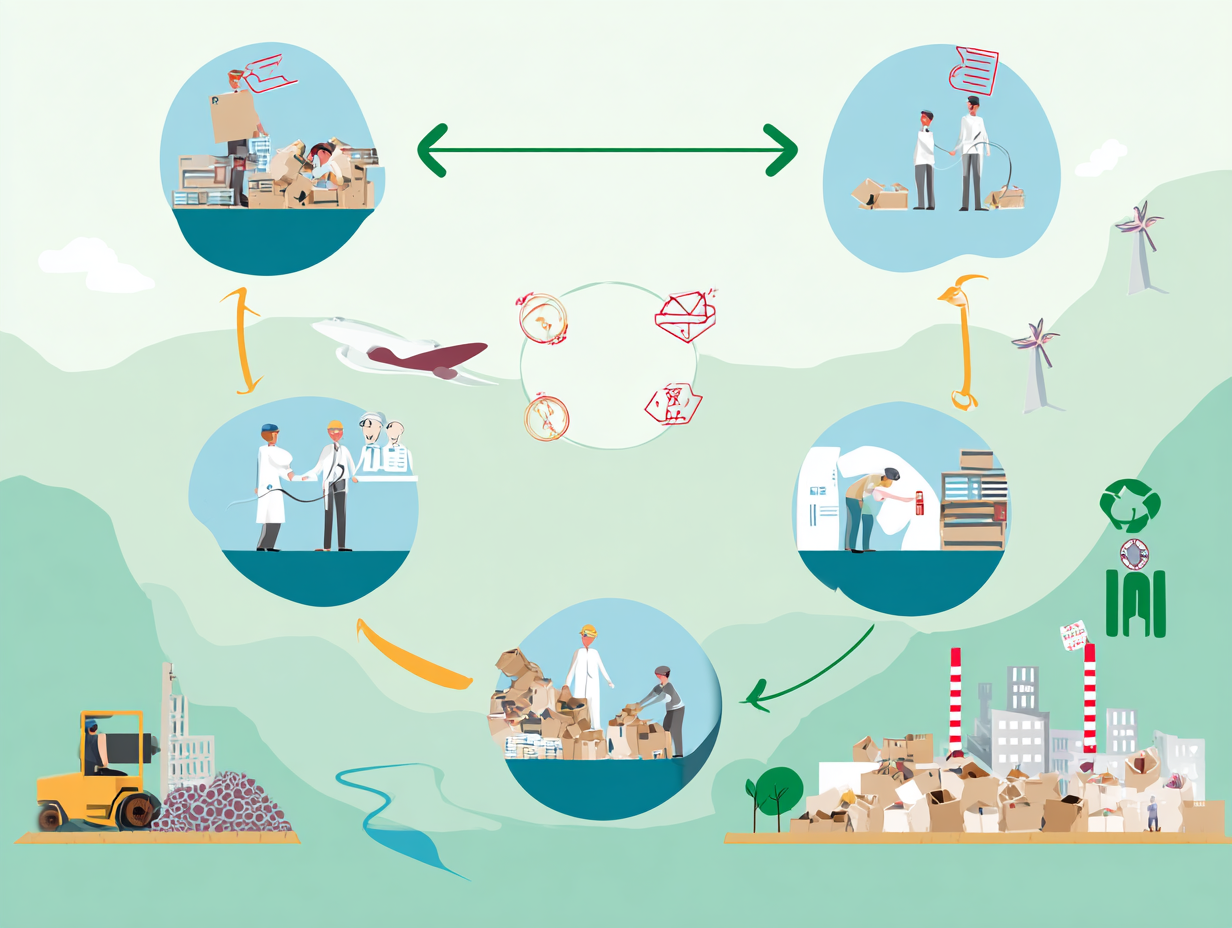
The project followed a sequential three-phase methodology:
1. Inventory Phase
- COLLECTORS Web Portal: A public, searchable database (www.collectors2020.eu) that standardizes how collection data is reported, allowing for “apples-to-apples” comparisons between different cities and countries.
- Knowledge Library: A centralized repository of existing studies and reports on waste management.
2. Assessment Phase
- Multicriteria Analysis: Beyond simple weight metrics, the project analyzed the purity of collected waste (crucial for recycling) and the cost-benefit ratio for local municipalities.
- Societal Acceptance: Studied how different collection methods (e.g., door-to-door vs. drop-off points) affect citizen participation and satisfaction.
3. Implementation (Ongoing/Future)
- Policy Guidelines: Translating the assessment of the 12 good practices into practical manuals for regional authorities.
- Capacity Building: Tools and workshops designed to increase the technical expertise of waste management decision-makers.
Socio-Economic & Societal Impact
COLLECTORS acts as a Coordination and Support Action (CSA), meaning its value lies in bridging the gap between theory and practice:
- Informed Decision-Making: Local authorities no longer have to “reinvent the wheel”; they can use the portal to find a region similar to theirs that has already solved a specific collection challenge.
- Secondary Raw Materials: By improving collection quality, the project directly supports European industry’s access to sustainable, recycled materials, reducing reliance on imports.
- Citizen Engagement: Through focus groups, the project highlighted that successful waste systems require “buy-in” from the public, emphasizing the human element in technical infrastructure.