Baubotanik Tower Overview
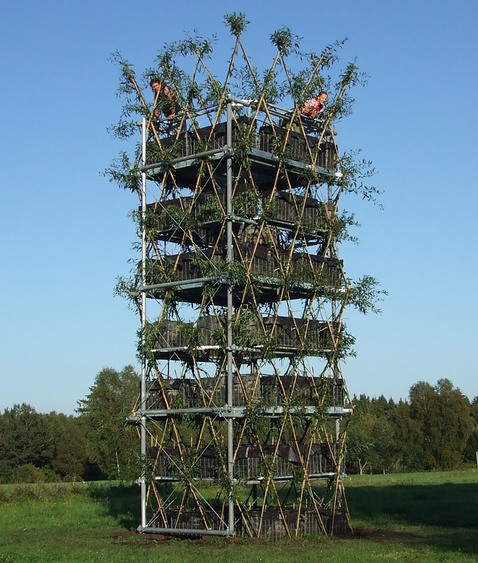
The Baubotanik Tower is an experimental structure showcasing Baubotanik, a method that fuses living trees with engineered elements to create self-supporting architecture. First built in 2009 near Stuttgart, Germany, it demonstrates how plants like white willows (later replaced with swamp birch) grow into a load-bearing framework over time.
Botanical Engineering Process
Baubotanik, coined in 2007 at the University of Stuttgart, involves “plant addition” where young trees are interconnected in scaffolds, allowing roots, stems, and branches to merge into a unified organism. Initially supported by temporary metal frameworks and irrigation, the structure evolves as trees thicken and transport water/nutrients naturally, eventually making scaffolds obsolete. This creates resilient, living buildings that adapt seasonally and provide ecological benefits like air purification.
Key Features
- Dimensions: Nearly 9 meters tall, 8 square meters footprint, three levels with steel platforms for maintenance.
- Plants: Started with hundreds of 2-meter Salix alba willows; 2017 update used fewer Betula pubescens for better site adaptation.
- Growth Phases: Shaping (forming connections), development (loaded growth under weather exposure), and self-sufficiency.