Eco‑Systemic Architecture for Future Cities
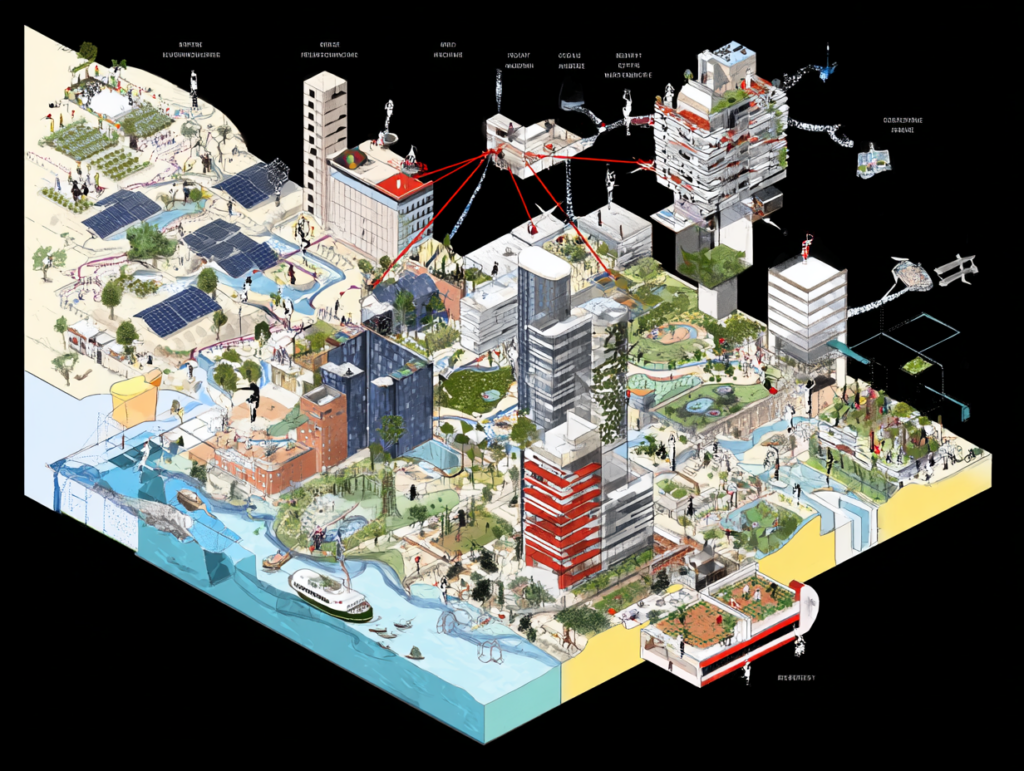
Eco‑systemic architecture treats the city as a living ecosystem where buildings, landscapes, infrastructure, and communities evolve together over time. It links spatial design with climate adaptation, biodiversity, circular resource flows, and social cohesion, helping cities meet EU climate and resilience goals.
Discover Our Story
What Is Eco‑Systemic Architecture?
Eco‑systemic architecture integrates ecological urbanism, regenerative design, and urban ecosystem thinking to shape compact, connected, and metabolically efficient cities. It focuses on creating adaptive spatial frameworks where nature‑based solutions, green‑blue networks, and low‑carbon buildings co‑evolve with citizens’ needs, rather than delivering isolated projects.
Key Topics We Explore
The following topics explain how eco‑systemic architecture supports strategic planning and EU‑funded interventions. Each theme links design principles with policy frameworks, enabling cities to regenerate existing districts while reducing environmental impact and increasing resilience
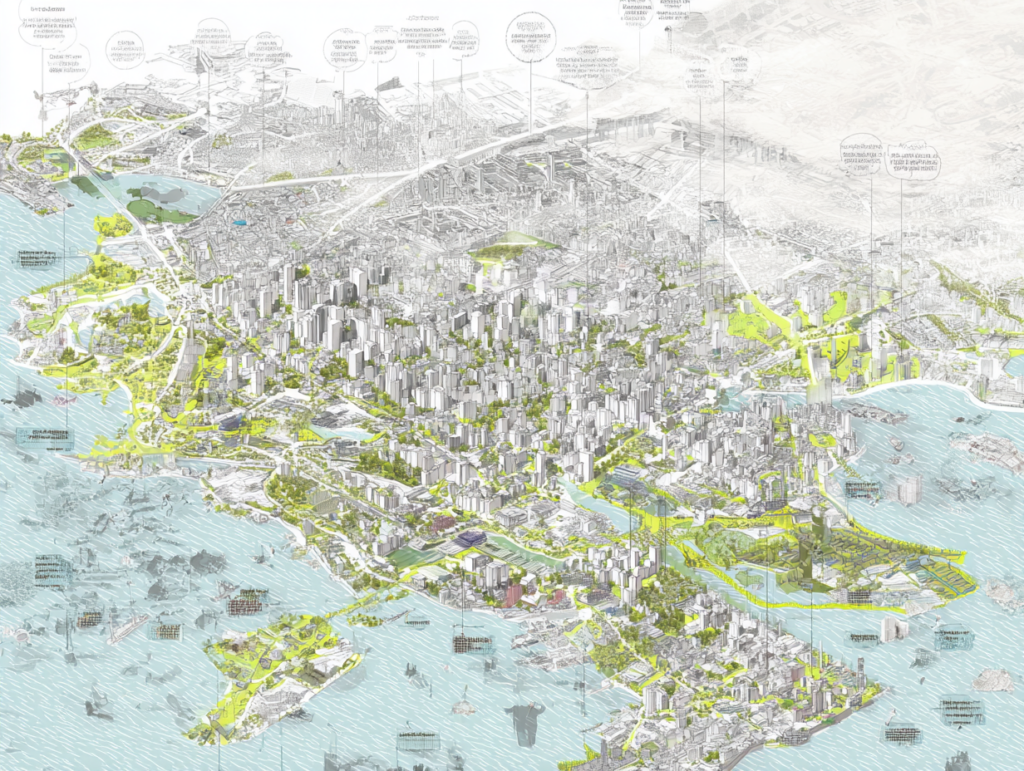
Cities as Ecosystems
This topic introduces the idea of the city as an open, dynamic ecosystem in which human, natural, and built components continuously interact. It explores biophysical matrices, green‑blue corridors, urban metabolism, and how compact, mixed‑use, walkable structures can reduce resource consumption while improving health and quality of life
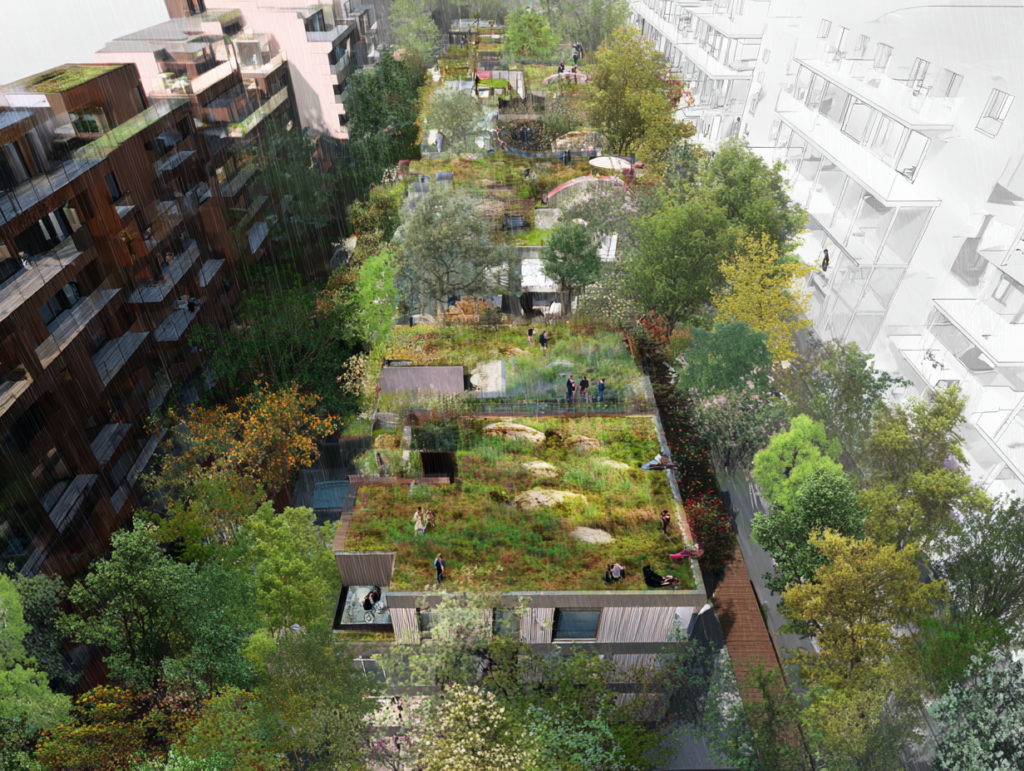
Regenerative Urban Fabrics & Nature‑Based Solutions
Here the focus is on transforming existing neighbourhoods through regenerative strategies that restore soils, water cycles, biodiversity, and social networks. The topic discusses nature‑based solutions, permeable and productive landscapes, climate‑responsive building envelopes, and how these can be embedded in EU projects addressing adaptation, disaster risk reduction, and green infrastructure.
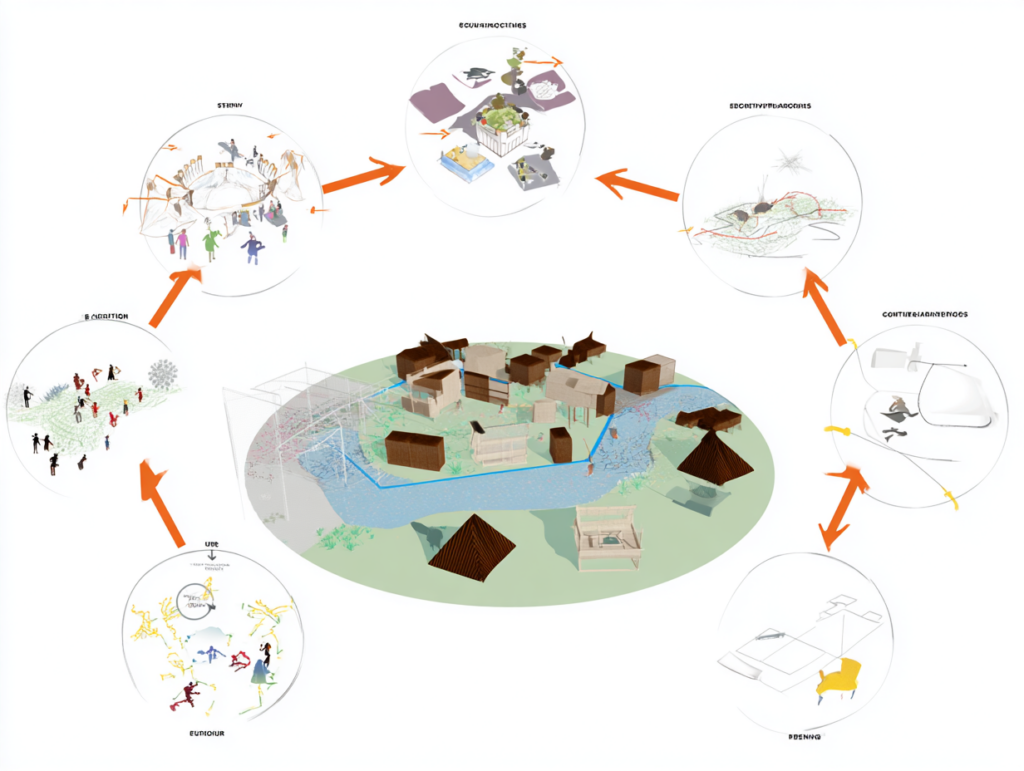
Governance, Time and Adaptive Implementation
Eco‑systemic architecture understands projects as long‑term processes rather than static objects, valuing intermediate stages and continuous adaptation. This topic looks at governance models, community participation, monitoring of ecosystem services, and phased implementation strategies that align with EU funding cycles and support learning over time.
Let’s Create Together
Connect with us to explore how we can make your vision a reality. Join us in shaping the future.