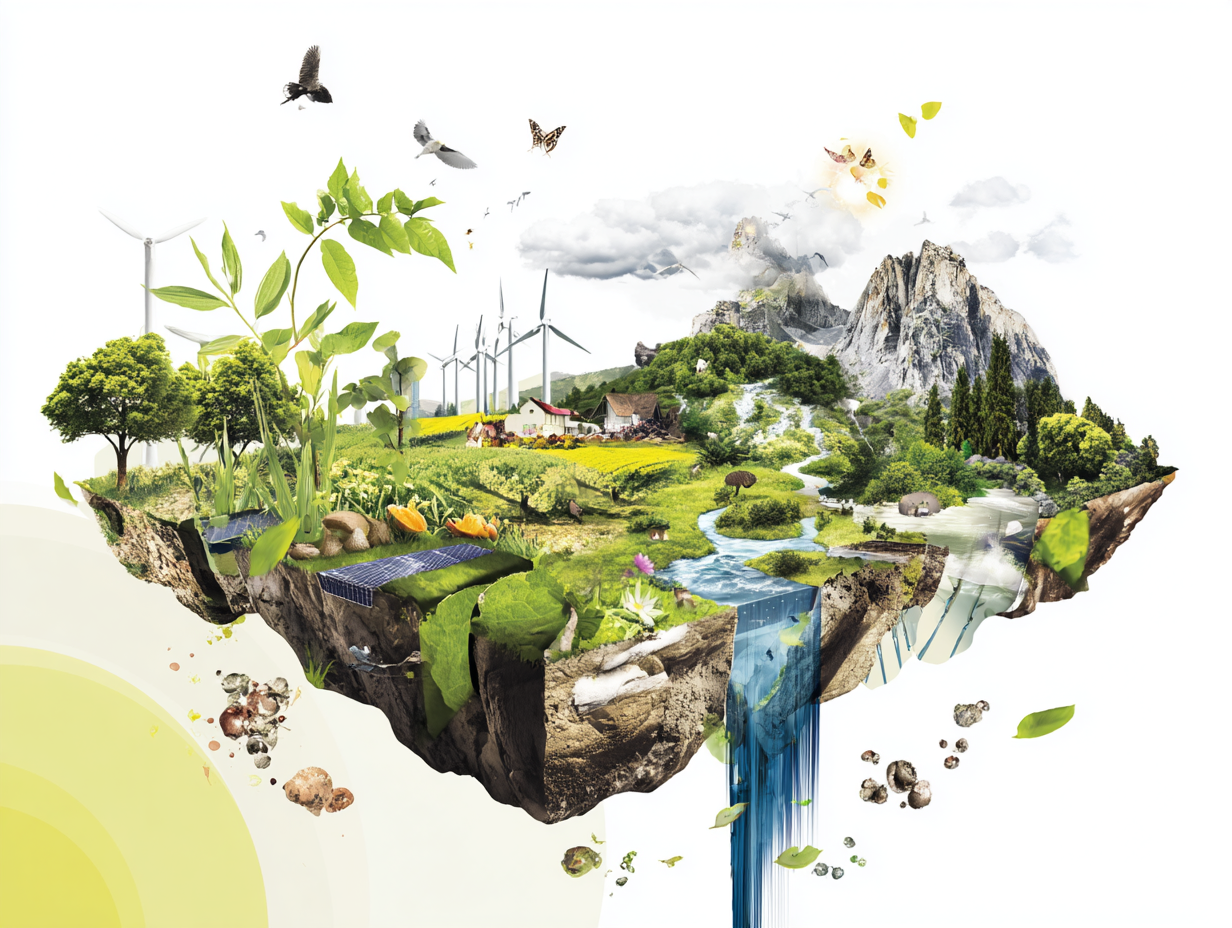
The CONNECTING Nature project (COproductioN with NaturE for City Transitioning, INnovation and Governance) aimed to bring Nature-Based Solutions (NBS) into the mainstream planning, design, and governance of cities. The project views nature as a technology to provide solutions to climate pressures and emphasizes co-production as a key approach to modify unsustainable urban behavior.
🎯 Main Objective and Framework
The principal outcome of the project is the Connecting Nature Framework—a process tool designed to guide cities and organizations toward the large-scale implementation of NBS.
The framework is structured into three phases (Planning, Delivery, Stewardship) and seven essential elements that must be considered throughout the process:
- Technical solutions
- Governance
- Financing and business models
- Nature-based enterprises
- Co-production
- Impact assessment
- Reflexive monitoring
💡 Key Results and Innovation Impact
CONNECTING Nature has successfully deployed its framework in ten partner cities, resulting in significant achievements in capacity building, innovation, and global outreach.
1. Capacity Building and Assessment
- Connecting Nature Framework Embedding: The framework elements were successfully adapted and embedded in the planning and implementation processes of all partner cities, contributing to their climate action and adaptation plans.
- Impact Assessment Tools: Developed the CO-IMPACT decision-support tool and the Assessment Toolkit to help assess NBS impact across multiple indicators.
- Knowledge Transfer: Established an effective NBS peer-to-peer knowledge transfer process between cities and coordinated three global Connecting Nature Summit Series events with over 2,000 participants.
2. Innovation and Enterprises
The project was highly successful in creating sustainable innovations and spin-off enterprises:
- Nature-Based Enterprise (NBE) Platform: Established the Connecting Nature Enterprise Platform, now the world’s largest community of NBEs, to raise awareness of the economic potential of NBS.
- Spin-off Innovations: Led to 92 new project innovations and the creation of 3 spin-off enterprises to ensure project sustainability:
- UrbanByNature (2019): A global capacity-building programme.
- EM|Path (2021): Focuses on co-production and engagement techniques for sustainable community development.
- Connecting Ecology (2022): Specializes in biodiversity surveys and NBS impact evaluation.
- Co-Impact (2022): An open-source app for creating NBS project evaluation and monitoring plans.
3. Global and Policy Outreach
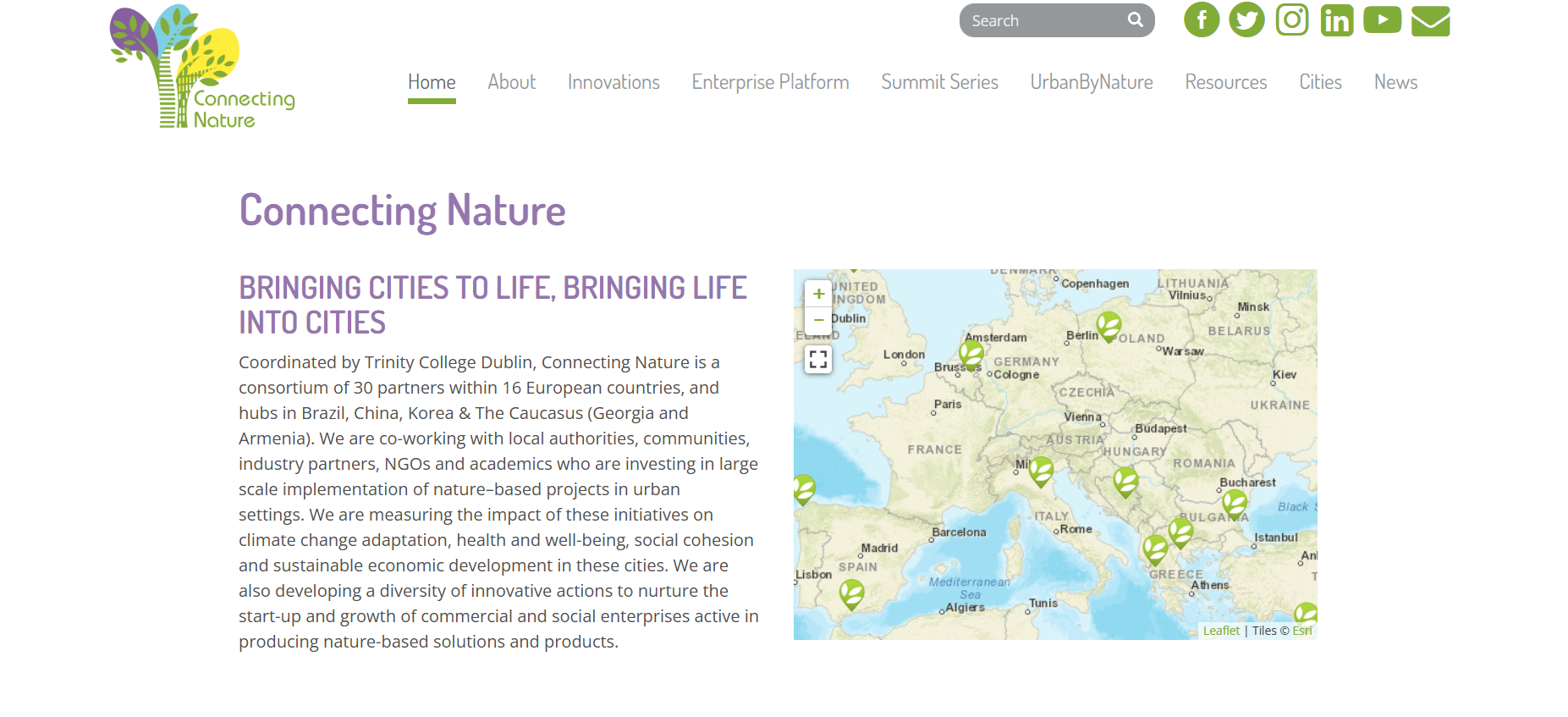
- UrbanByNature Programme: Successfully launched global hubs (in Brazil, China, Korea, etc.) in collaboration with CitiesWithNature and ICLEI, sustaining the project’s outcomes globally.
- Policy Contribution: Lead authors contributed to two pivotal EC Expert Publications on NBS impact and the nature positive economy, significantly enriching the global knowledge base.
- Practice Impact: Project outcomes were embedded into the RTPI accreditation of planning courses across the UK and Ireland and are being delivered through Continuous Professional Development (CPD) training for professionals in Ireland, Poland, and Spain.
🚀 Impact and Legacy
The deployment of the Connecting Nature framework has resulted in substantial, measurable impacts on cities and the wider policy landscape:
- Leveraged Funding: Several partner cities secured significant funding for scaling up NBS implementation (e.g., Nicosia secured €8m, Ioannina secured €10m).
- Strategic Alignment: 5 Connecting Nature cities were selected for the EU Mission on Climate-Neutral and Smart Cities by 2030, confirming the framework’s relevance.
- Global Recognition: The UrbanByNature program is now hosted by CitiesWithNature (a registry with over 215 signatory cities), ensuring the project’s longevity and global reach.